Quick answer: Removing a pine tree in the Fayetteville area typically runs from about $350 for a small, easy tree to $3,000 or more for a tall pine leaning over a house or power line. Most homeowners with a 50 to 80 foot loblolly in an open yard land somewhere between $700 and $1,800. These are estimates only; the real number depends on height, lean, access and what is underneath the tree.
Key takeaways
- Height is the biggest price driver: a 100-foot pine can cost several times more than a 40-foot one.
- Lean, nearby structures and power lines add risk, rigging time and cost.
- Stump grinding, debris haul-off and crane use are often separate line items.
- Get at least two or three written quotes that spell out exactly what is included.
Pines are the most common removal request across Cumberland County, from older neighborhoods in Fayetteville to wooded lots in Hope Mills, Stedman and Spring Lake. Loblolly pines grow fast and tall, and longleaf pines can stand 80 feet or more. That height is exactly why pine removal pricing varies so much from one yard to the next.
Want a real number for your tree? Request free quotes for your pine tree removal using the form on this page and compare local options.
Estimated Cost to Remove a Pine Tree by Height
Tree companies price pines mostly by how tall they are, because height determines how much work, rigging and risk is involved. The ranges below are rough estimates for the Fayetteville area and assume reasonable access.
- Under 40 feet: roughly $300 to $700
- 40 to 60 feet: roughly $600 to $1,200
- 60 to 80 feet: roughly $1,000 to $2,000
- 80 to 100+ feet: roughly $1,800 to $3,500 or more
Prices can land outside these ranges, especially after storms when demand spikes. For a broader look at how size affects pricing, see our guide to tree removal cost by tree size in Fayetteville, and our dedicated page on pine tree removal cost for tall loblolly and longleaf pines.
Why Tall Pines Cost More to Remove
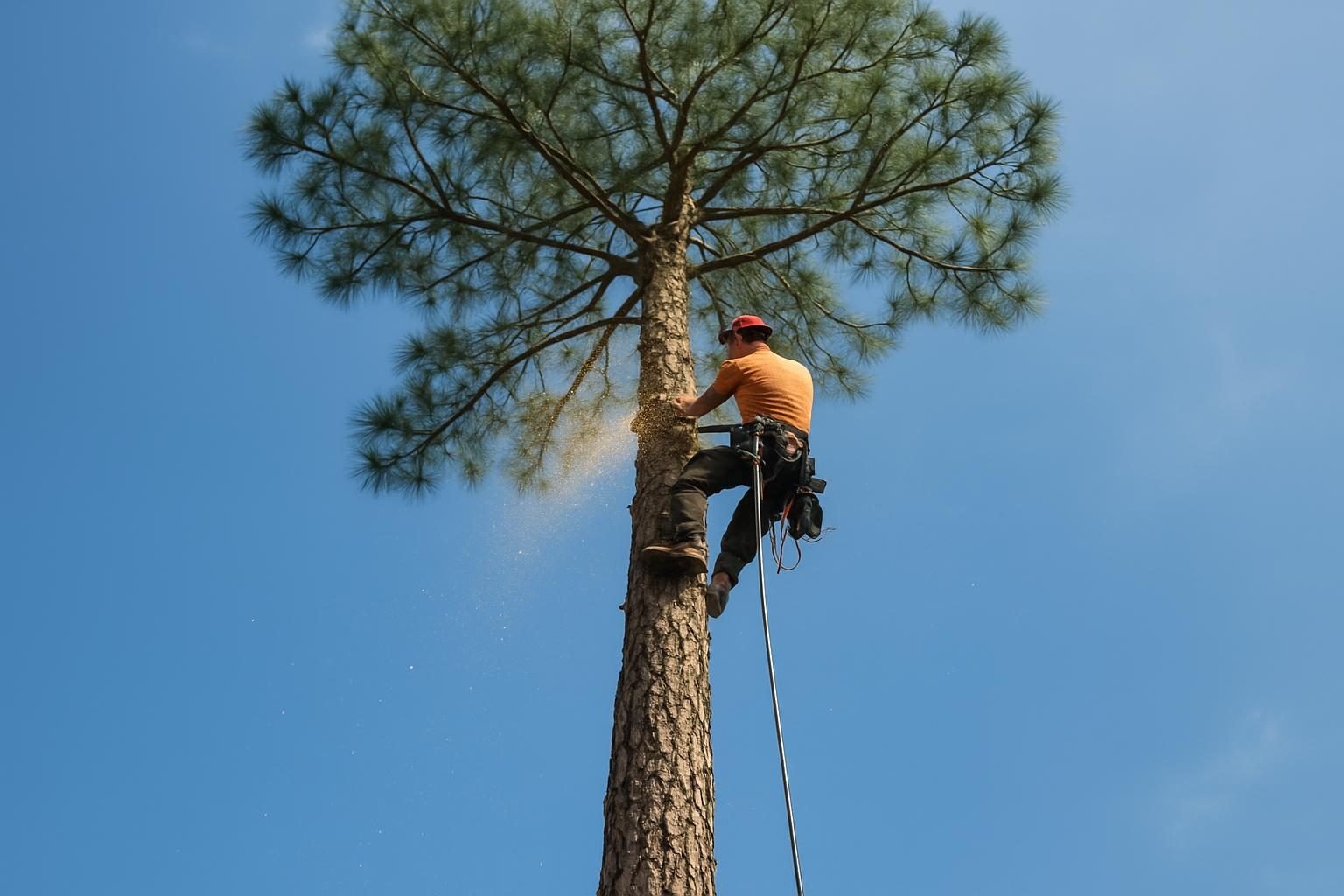
A tall pine is not just a bigger version of a short one. The extra cost comes from several real differences in how the job is done.
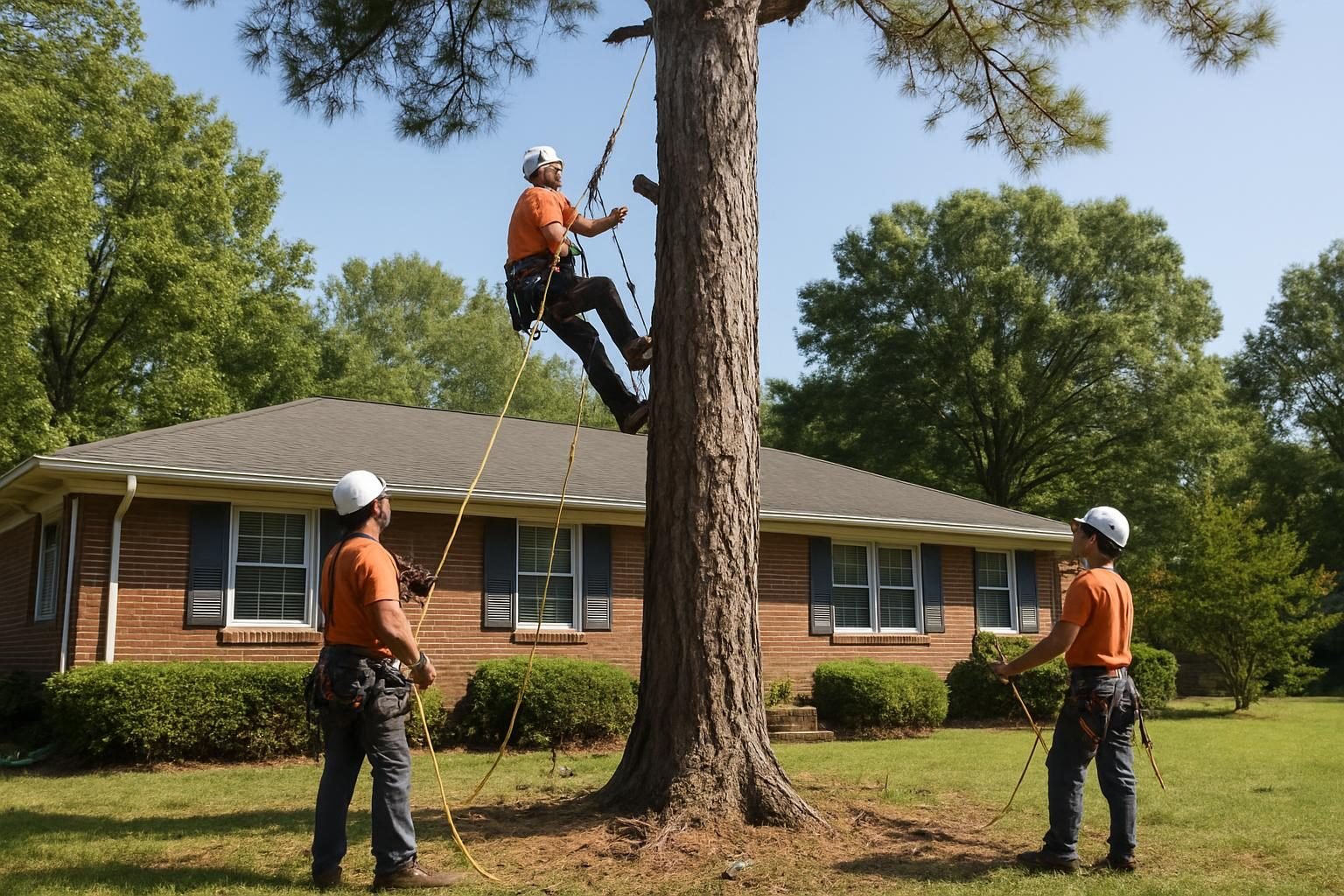
- Climbing and rigging time: Crews often climb and take the tree down in sections rather than felling it whole, especially near structures.
- Equipment: Taller trees may call for a bucket truck, heavier rigging gear or a crane.
- Risk and insurance exposure: More height means more potential damage if something goes wrong, which is reflected in pricing.
- Volume of wood: Long straight trunks and heavy limbs mean more cutting, hauling and chipping.
- Crew size: Big removals often need more people on the ground.
Pines also have a quirk: they drop a lot of limbs and carry heavy tops, so a careless drop zone can damage a roof or fence. Good crews plan the cut carefully, and that planning is part of what you pay for.
With pines, every extra 20 feet of height can add hundreds of dollars to the job.
How Lean, Location and Nearby Structures Change the Price
Two pines of the same height can have very different quotes. What matters is what the tree could hit and how easily a crew can work around it.
Lean
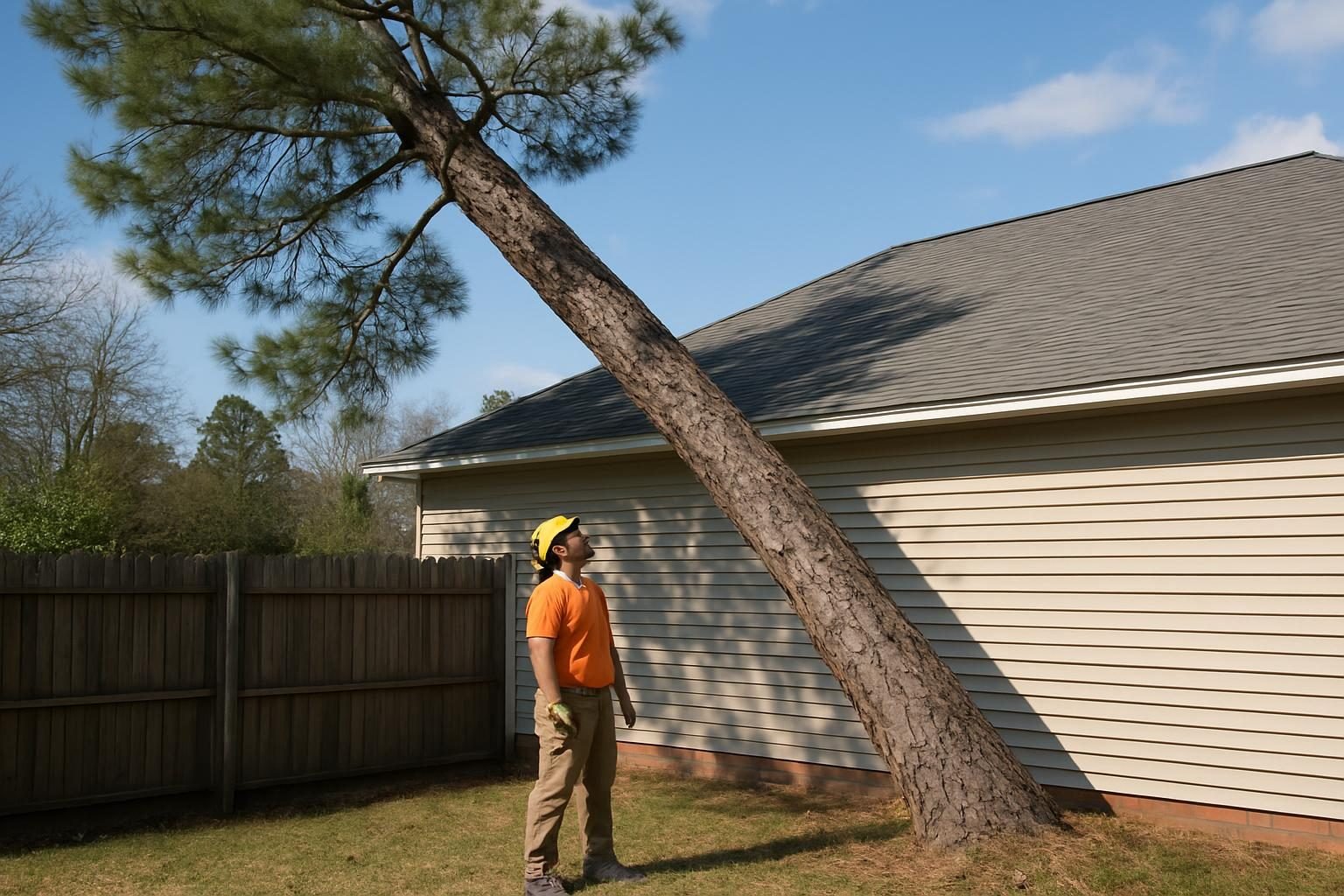
A pine that leans toward a house, shed or driveway can’t simply be dropped in that direction. Crews may need to pull it with ropes or dismantle it piece by piece, which adds labor. Leaning trees that look unstable may also need a closer look, so read our guide on when to remove a pine tree near your house.
Nearby structures and obstacles
- Close to a roof or garage: sectional removal is usually required.
- Fences, pools and gardens: add protection and careful placement of pieces.
- Power lines: work near lines is more hazardous and can raise the price substantially. If a tree is actually touching or tangled in a line, read what to do when a tree falls on a power line before anyone approaches it.
- Tight backyard access: if equipment can’t reach the tree, crews carry everything by hand, which takes longer.
When a tree is too tall or too close to structures for safe climbing, a crane may be the right tool. We break down when that makes sense in our crane tree removal cost guide.
Loblolly vs. Longleaf Pine: Does the Species Matter?
Both are common in Cumberland County, and for pricing purposes they are treated fairly similarly. Height, lean and access matter far more than which pine it is.
- Loblolly pine: fast-growing, often tall and thin, and common in residential yards. Older loblollies can be shallow-rooted and prone to toppling in saturated soil during hurricanes and tropical storms.
- Longleaf pine: slower-growing with a deep taproot and long needles. A healthy longleaf is generally sturdy, but large ones are still large jobs.
One practical note: because longleaf pines are a valued native species in the Sandhills region, some homeowners prefer to keep a healthy one rather than remove it. A professional assessment can help you decide, and our arborist tree assessment page explains what that involves.
Pro tip: Take two or three clear photos of the whole tree, including the base and anything close to it, before you request quotes. Good photos help companies give a more accurate estimate.
What Else Can Be Added to Your Pine Removal Quote
The base price often covers cutting the tree down and hauling away the debris, but not always. Ask exactly what is included so you can compare quotes fairly.
- Stump grinding: commonly $100 to $400 or more depending on diameter. See our guide to stump grinding cost per stump in Fayetteville and the page on stump grinding.
- Debris haul-off: sometimes included, sometimes extra. If you want to keep firewood or chips, tell the crew. Our article on yard waste and tree debris disposal in Cumberland County covers your options.
- Crane or specialty equipment: usually billed separately.
- Emergency or after-storm work: typically costs more. See emergency tree removal cost after a storm in Fayetteville.
The cheapest quote isn’t always the best one if it leaves out cleanup, stump work or insurance.
When a Pine Must Come Down Sooner Rather Than Later
Some pines are worth removing before they become emergencies, and acting early is usually cheaper than waiting for storm damage. Signs include:
- Browning or red needles across the whole crown
- Small round holes, pitch tubes or peeling bark that may point to beetles (see southern pine beetle and Ips beetle signs in Cumberland County)
- A sudden new lean or heaved soil at the base
- Large dead limbs hanging over a roof or driveway
For a wider checklist, read 9 signs a tree is dying. If you’re unsure whether your pine is dead or just stressed, our upcoming guide on how to tell if a pine tree is dead will help.
It is also worth checking whether your property needs approval first. See whether you need a permit to remove a tree in Fayetteville, NC, and whether your policy may help in does homeowners insurance cover tree removal in North Carolina.
How to Get an Accurate Price and Hire Well
- Get two or three written quotes. A phone guess can’t account for lean, access or power lines.
- Ask what’s included: cleanup, stump grinding, wood and chip haul-off.
- Ask about insurance. Request proof of liability and workers’ compensation coverage rather than taking it on faith.
- Be wary of pressure. After hurricanes, door-to-door crews with big upfront demands are a red flag. See how to spot tree service storm chasers.
- Compare scope, not just price. A lower bid that skips cleanup may cost more in the end.
For local context, see our pages on tree removal in Fayetteville and the overall tree service cost in Fayetteville guide. If you’re in Raeford, our upcoming page on raeford nc tree removal will cover local specifics.
Ready to compare prices? Request a free pine tree removal quote from local companies serving Fayetteville, Hope Mills, Spring Lake and surrounding areas.
FAQ: Pine Tree Removal Costs
How much does it cost to remove a 60-foot pine tree?
As a rough estimate, a 60-foot pine in an open yard often costs about $800 to $1,600. If it leans toward a house, sits near power lines or needs a crane, the price can climb well above that.
Is stump grinding included in the price?
Not always. Many companies price stump grinding separately, so confirm it in writing. Some offer a discount if you book removal and grinding together.
Why are pine trees expensive to remove?
Because they grow tall and straight, many pines require climbing, rigging and sectional removal, especially near homes. More height means more labor, equipment and risk.
Can I remove a pine tree myself to save money?
For anything beyond a small sapling, it’s generally not recommended. Felling large pines is dangerous, and mistakes can damage property or cause serious injury. A qualified professional with proper insurance is the safer choice.
Get free pine tree removal quotes in Fayetteville
A local tree service company will contact you with a free, no-obligation quote for your pine tree.